📑 Jump to Section (Table of Contents)
Why is having a CRM important to a business? A CRM system is important because it centralizes customer data into a single source of truth, automates revenue operations across sales, marketing, and customer support, accelerates sales cycle velocity, and eliminates lead leakage. Independent economic benchmarks from Nucleus Research confirm that every $1 invested in CRM yields an average return of $8.71 by expanding Customer Lifetime Value (CLV), decreasing customer acquisition friction, and eliminating costly departmental silos.
The Executive Summary: The Modern Imperative of Customer Relationship Management
In today's hyper-competitive commercial environment, customer acquisition costs have surged across both B2B and B2C sectors. Buyers engage through multiple digital touchpoints—web portals, email cadence, live chat, video conferences, social channels, and product trials—before ever speaking to an account executive.
When a commercial organization lacks a unified system to record, analyze, and orchestrate these multi-touch interactions, revenue predictability collapses. A centralized Customer Relationship Management (CRM) platform unifies disparate enterprise customer touchpoints into a cohesive operational workflow. Without this infrastructural foundation, organizations rely on fragmented spreadsheets, disconnected communication silos, and subjective guesswork.
While standard industry overviews often focus on surface-level benefits like contact storage and basic reporting dashboards, high-level summaries rarely detail the mathematical and architectural mechanisms that separate market leaders from struggling businesses.
At its core, a CRM is not a digital address book; it is a programmable revenue engine. Having a robust CRM empowers leadership to systematically control the variables governing corporate growth: acquisition velocity, customer retention rates, operational overhead, and employee productivity.
The Hidden Cost of Inaction (COI): What Happens to a Business Without a CRM?
Many executives postpone CRM deployment because of perceived friction, setup complexity, or satisfaction with "temporary" spreadsheets. But inaction is never free. The Cost of Inaction (COI) compounds silently across balance sheets through three primary failure modes:
1. The Spreadsheet Trap and Data Corruption
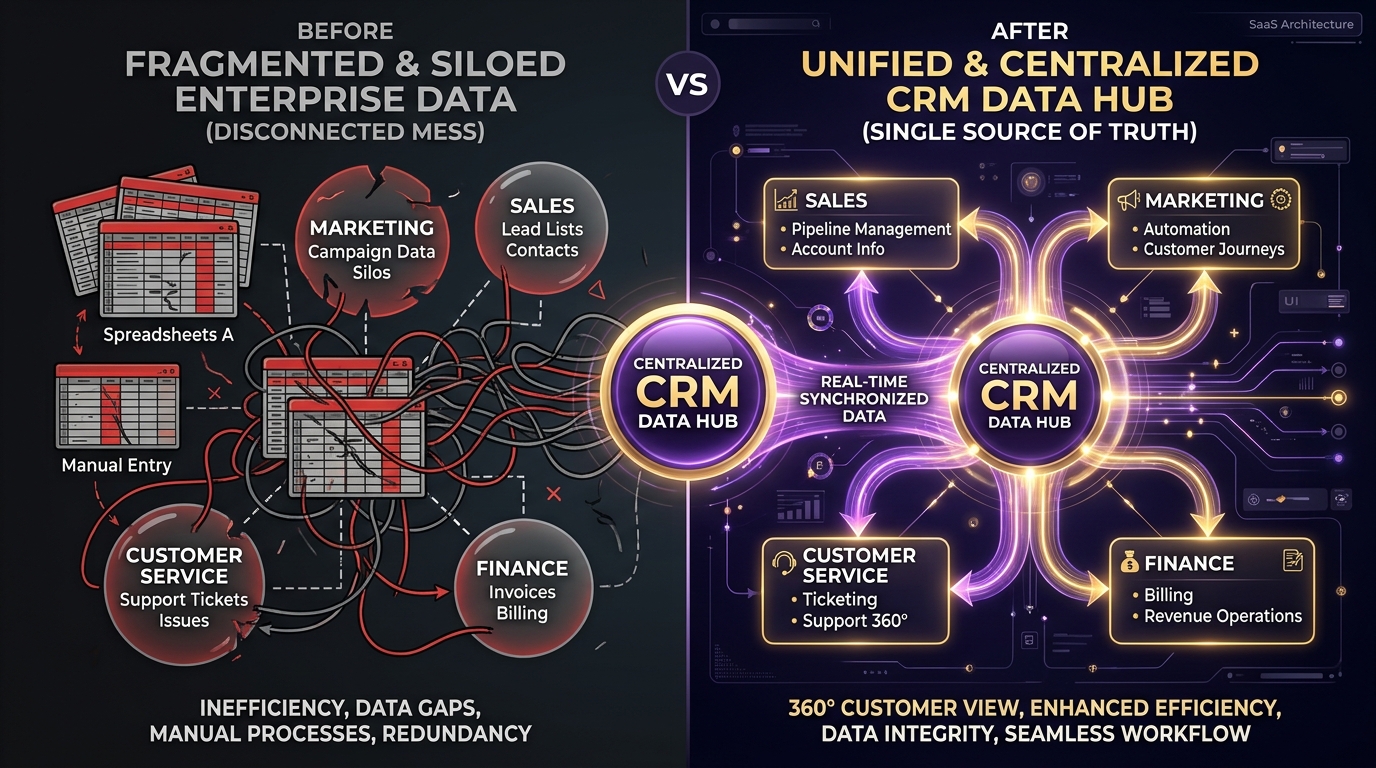
Spreadsheets are static, single-user artifacts designed for calculations, not dynamic customer relationship lifecycles. When sales teams manage opportunities in Excel or Google Sheets, version collisions occur immediately. Customer phone numbers change without notice, deal stages fall out of sync with billing, and historical communications remain locked inside individual employees' inboxes.
2. Severe Lead Leakage and Unenforced SLA Protocols
According to sales conversion studies published by the Harvard Business Review, businesses that contact inbound leads within one hour are nearly seven times more likely to qualify the lead than those that wait even two hours. Without an automated CRM pipeline routing leads and triggering instant Service Level Agreement (SLA) alerts, more than 70% of inbound commercial inquiries are abandoned or addressed days too late.
3. Devastating Tribal Knowledge Loss During Employee Turnover
When a top-performing account executive or client manager leaves an organization that lacks a centralized CRM, their customer history leaves with them. Unwritten contract renewal nuances, pricing negotiations, and customer pain points vanish. Centralized CRM interaction records safeguard organizational customer intelligence against personnel churn, ensuring seamless deal continuity.
9 Quantifiable Reasons Why Having a CRM Is Important to a Business
Understanding the value of a CRM requires looking past generic software features and examining concrete business outcomes. Here are the 9 strategic pillars demonstrating why having a CRM is essential for modern enterprise viability:
1. Maximizing Customer Lifetime Value (CLV) and Retention Rates
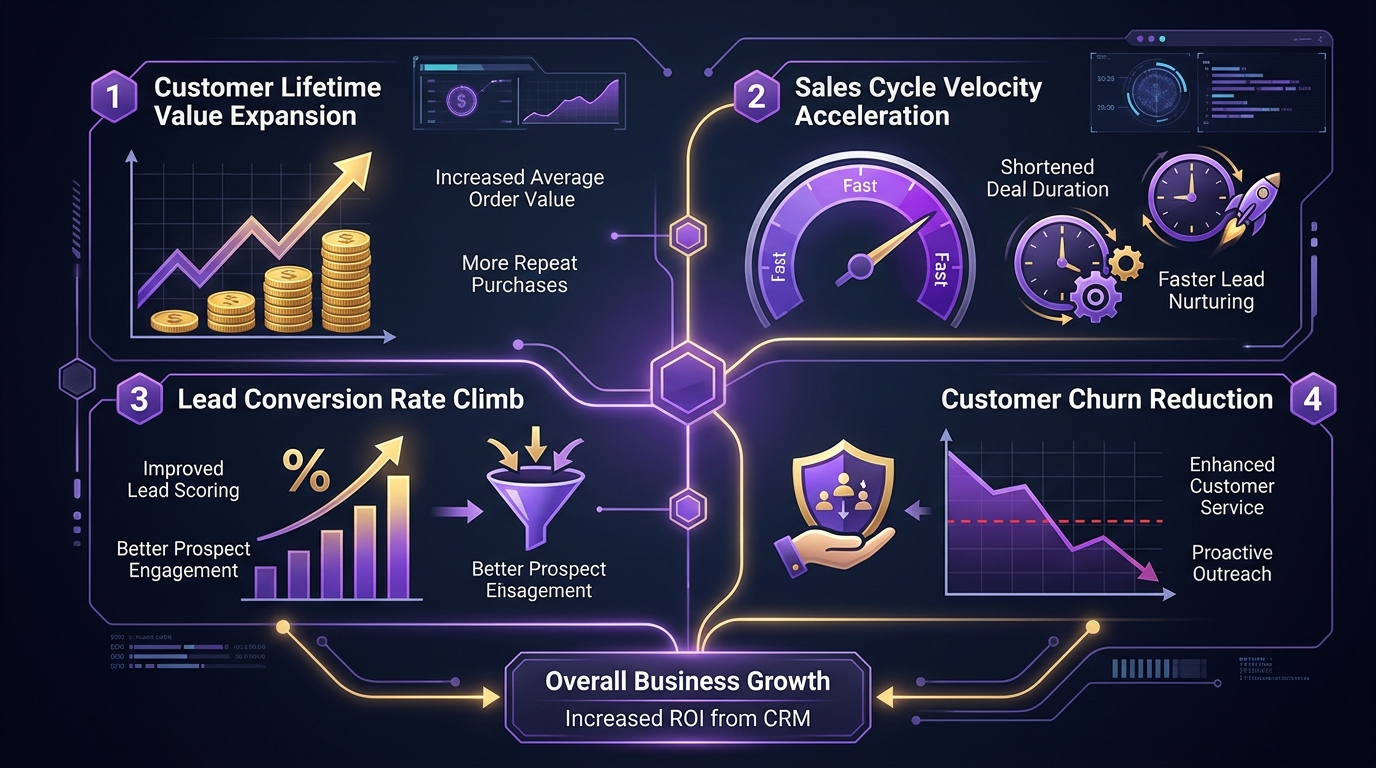
Acquiring a new customer costs 5 to 7 times more than retaining an existing one. Classic research conducted by Bain & Company and published in Harvard Business Review shows that increasing customer retention rates by just 5% increases overall profits by 25% to 95%.
A CRM accomplishes this by cataloging contract renewal dates, tracking usage analytics, monitoring open support tickets, and scheduling proactive touchpoints. Having centralized customer interaction histories prevents unexpected customer churn by surfacing relationship health signals in real time.
2. Accelerating Sales Pipeline Velocity
Sales velocity measures how fast prospective buyers move through your funnel and generate realized revenue. Every commercial sales team is bound by the Pipeline Velocity Equation:
Where V represents your pipeline revenue generated per day. A CRM simultaneously improves all four components: it expands qualified opportunities via automated nurturing, boosts win rates via stage-gated playbooks, increases deal size through cross-selling, and cuts sales cycle length in half.
According to enterprise benchmarks by the Aberdeen Group, sales representatives equipped with robust CRM solutions achieve 24% higher annual quota attainment than their peers who rely on legacy ad-hoc tracking.
3. Establishing a Frictionless Single Source of Truth (SSOT) Across Departments
In un-integrated companies, marketing blames sales for ignoring generated leads, sales accuses marketing of delivering unqualified traffic, and customer service operates in complete isolation from billing.
A CRM unifies these departments into a cohesive operational unit. When a client contacts your helpdesk, the support agent instantly views the customer's active contract, past billing inquiries, recent product purchases, and account executive notes. This cohesion eliminates customer frustration caused by repeating account history to multiple staff members.
4. Slashing Customer Acquisition Cost (CAC) via Attribution Analytics
Without granular CRM tracking, marketing budgets are spent blindly. A modern CRM connects web campaigns, pay-per-click advertising, organic search, and outbound email directly to closed-won revenue, rather than vanity metrics like page impressions or newsletter clicks.
Closed-loop CRM reporting calculates the exact return on marketing investment across every lead acquisition channel. By identifying which traffic sources yield the highest Customer Lifetime Value, businesses can reallocate marketing capital toward profitable customer segments and slash wasted ad expenditure.
5. Empowering Proactive, Context-Aware Customer Service
Modern buyers expect instantaneous, knowledgeable support. Integrating CRM data with customer service desks allows teams to configure proactive health-score algorithms. If a client's login frequency drops or ticket submissions spike, the CRM alerts account managers to intervene with customized training before the client cancels their subscription.
6. Eliminating Repetitive Overhead via Workflow Automation
Studies published in sales effectiveness research show that sales representatives spend less than 35% of their working hours actively selling; the remaining 65% is consumed by administrative overhead—manual data entry, scheduling meetings, drafting quotes, and searching for contact details.
Automated CRM systems handle call transcription, stage transitions, document generation, and follow-up cadences automatically. By recovering 10 to 15 hours per representative each week, companies effectively expand their sales capacity without hiring additional headcount.
7. Unlocking Predictive Revenue Forecasting for Leadership
Executive boards and financial officers cannot steer organizations using guesswork. A CRM transforms pipeline data into probabilistic cash-flow models based on real-time stage progression, historical conversion rates, and representative performance trends. Leaders make informed capital investments, hiring decisions, and expansion plans with empirical data backing every forecast.
8. Enforcing Regulatory Compliance and Data Governance
Data privacy regulations like GDPR, CCPA, and HIPAA require rigorous governance over consumer personal information. Storing client records across multiple unencrypted personal spreadsheets creates massive legal liability.
A modern CRM centralizes data consent records, enforces role-based access control (RBAC), logs audit trails, and provides one-click compliance tools to process Right-to-be-Forgotten requests. For companies operating in healthcare or financial sectors, specialized architectures like those explored in our guide to HIPAA-compliant CRM development are mandatory for operational legality.
9. Fueling Modern AI Agents and Autonomous Task Execution
As detailed in our analysis of the future of AI-driven CRM systems in 2026, artificial intelligence cannot function in a vacuum. AI agents require clean, structured, and contextual customer data to perform automated lead scoring, write personalized outreach messages, and autonomously resolve tier-one customer service inquiries. Your CRM is the knowledge foundation that makes enterprise AI execution possible.
The Reddit Reality Check: Is a CRM Really Just a “Nice-to-Have”?
In corporate boardroom presentations, software vendors always paint CRM as an indispensable panacea. But what do real business owners, solopreneurs, and operators say when speaking candidly?
A revealing thread in the Reddit r/CRM community titled “Is it just me, or is CRM just a nice-to-have for most businesses?” sparked passionate debate among hundreds of founders and sales professionals. Examining the user queries and real-world friction in that discussion provides direct answers to why companies struggle with CRM—and why the right setup transforms operations:
“When I was a solopreneur, I did everything on Google Sheets, kept track of conversations in notebooks, and sent emails manually... Within a few weeks, I got severely burned out to the extent I had to stop outreach for a month before I regained energy. In the meantime, my business suffered. Spending money on CRM seemed like a joke... But when I set up automated follow-ups and pipelines, I was mindblown. Now it's the heart and soul of my business.”
1. The Solopreneur Burnout Trap: Why “Free” Spreadsheets Cost Thousands
As Reddit user sansaaegon candidly documented, many founders fall into the trap of believing that spreadsheets and manual notebooks represent “zero cost and 100% margin.” In practice, manual data entry creates severe cognitive exhaustion. When a founder or sales rep spends 4 hours every day cross-referencing contact spreadsheets, typing repetitive status updates, and manually drafting follow-ups, proactive selling stops completely. Lead response times slip, pipeline momentum stalls, and personal burnout forces outreach freezes that cripple cash flow.
“Trying to run a growing business without a CRM is like trying to run a restaurant with no kitchen — you might manage for a while, but you're making things way harder than they need to be.”
2. The “Restaurant Without a Kitchen” Analogy: Closing the 30% Pipeline Gap
As user rmsroy highlighted, running customer operations on ad-hoc spreadsheets is like operating a commercial restaurant without dedicated kitchen infrastructure. When orders are taken on random scraps of paper, meals arrive cold or get lost entirely. By centralizing customer history, past orders, and automated triggers, their sales jumped by over 33% simply through systematic follow-up. Furthermore, as user TallC00l1 noted: “If you don't track your customers, your competitors will track them and take them.”
“I spend more time f***ing with the software than ACTUALLY working — they are a waste of time and money.”
3. Diagnosing the Anti-CRM Backlash: The “CRM Bloatware Trap”
Why do operators like user LOVESOLVESALL passionately hate their CRM? Because traditional enterprise software implementations suffer from the “CRM Bloatware Trap.” When management configures an off-the-shelf CRM with 45 mandatory data fields, sluggish interfaces, and confusing nested menus, the software transforms from an execution accelerator into an administrative ball-and-chain.
As Reddit commenter kishmalik concisely summarized: “If you don't see the value in a CRM for your business, you're probably using it wrong.” When a CRM is engineered or configured around streamlined rep workflows—with one-click logging, automated email tracking, and clean pipeline stages—reps actually enjoy using it because it saves them hours every day. This friction is precisely why businesses seek professional CRM Strategy & Consulting Services and bespoke UI customization.
The Giants’ Blueprint: What Oracle & Salesforce Get Right (and Where They Fall Short)
The world's leading enterprise software providers dedicate vast research to explaining why CRM systems are essential to commercial survival. Examining their foundational analyses reveals critical insights—as well as crucial blind spots:
According to Oracle’s Customer Experience Guide on Why CRM Is Important, the primary warning sign that a company is failing without a CRM is the “Unknown High-Value Account” problem. When sales, customer service, and marketing do not share unified databases, commercial teams cannot identify which stakeholders hold purchasing authority, duplicate sales outreach, and repeatedly deliver disjointed customer service that alienates profitable accounts.
Similarly, in their comprehensive industry benchmark on the 11 Greatest Benefits of CRM Platforms, Salesforce highlights that unified CRM architectures create a seamless 360-degree customer profile, accelerate mobile accessibility for field representatives, and automate customer-centric journeys across the entire buyer lifecycle.
However, what neither tech titan readily discusses is the cost equation: Off-the-shelf enterprise platforms rely on rigid per-user pricing structures that escalate drastically. For mid-market businesses and high-growth companies with 50 to 200 users, paying $150 to $300 per seat each month creates astronomical ongoing overhead, while forcing proprietary company operations into generic software molds.
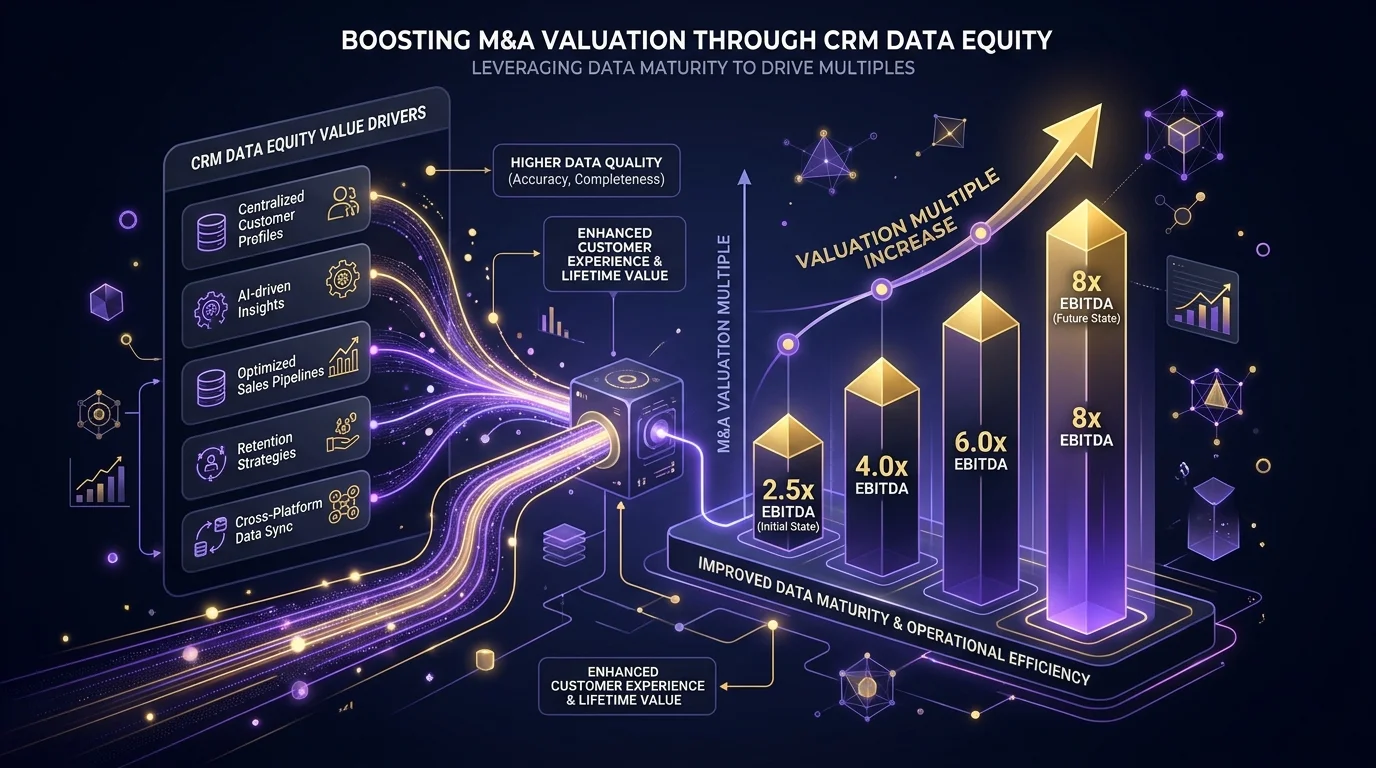
The Information Gain Angle: How a CRM Multiplies Your Company’s Enterprise Exit Valuation (M&A)
Virtually every standard blog post on Google answers “Why use a CRM?” with operational platitudes: “it organizes contacts” or “it sends automated emails.” While true, these generic points completely miss the most lucrative financial dimension of CRM adoption: institutional equity valuation and M&A transaction multiples.
In the viral Reddit discussion referenced above, CPA and nationally recognized business adviser Gene Marks (genemarks) made a profound point that every founder and executive board must understand:
“I have a number of clients who built strong CRM systems and exited their business with great value because of the strength of their data. So yes, it's not only a good short term tool but something that increases the value of a business long term.”
When private equity firms, venture capitalists, or strategic buyers perform due diligence on an acquisition target, they do not acquire a founder's memory or an account executive's personal phone contacts. If customer relationship histories, sales pipelines, and renewal cycles live inside employees' personal inboxes and mental notes, that revenue is deemed high-risk tribal knowledge. If key personnel resign post-acquisition, customer revenue evaporates.
Conversely, a business powered by a centralized, auditable CRM platform proves:
- Historical Cohort Retention: Verifiable, multi-year net revenue retention (NRR) and low churn rates backed by timestamped data.
- Repeatable Pipeline Machinery: Clear conversion velocities from lead generation to cash collection that do not depend on any single individual.
- Data Sovereignty & IP Value: Proprietary market intelligence, customer preference histories, and structured data sets ready to power predictive machine learning models.
In enterprise M&A transactions, this operational distinction often represents the difference between selling at a depressed 2.5× to 3.5× EBITDA multiple versus commanding a premium 6× to 10× valuation multiple. Investing in an institutional CRM system is not a software expense—it is equity value creation.
CRM Impact Matrix: Business Performance With vs. Without a CRM
To visualize the tangible operational differences, review this side-by-side performance comparison based on enterprise operational audits:
| Operational Dimension | Without a CRM (Spreadsheets & Silos) | With an Optimized CRM System | Measured Business Impact |
|---|---|---|---|
| Lead Response Time | 24 to 72 hours (manual routing) | Instantaneous / < 5 minutes (automated) | 391% boost in lead qualification rate |
| Pipeline Visibility | Subjective gut-feel updates during weekly meetings | Real-time stage gates & weighted probability | 94% forecast accuracy vs. 52% baseline |
| Sales Rep Selling Time | 33% of working hours spent selling | 60%+ of working hours spent selling | +27 hours/month of direct prospect selling |
| Customer Retention & Churn | Reactive intervention after cancellation notices | Proactive health-scoring & automated check-ins | 15% to 28% decrease in annual client churn |
| Data Loss on Staff Turnover | Substantial; notes & relationships stay in inbox | 0%; 100% of interaction history is centralized | Seamless account re-assignment within 24h |
| Cross-Department Alignment | Isolated tools, conflicting data reports | Single Source of Truth (SSOT) shared across org | 42% reduction in inter-departmental friction |
Beyond Off-the-Shelf SaaS: When Standard Subscriptions Fail and Custom CRM Architecture Wins
When evaluating why having a CRM is important to a business, many decision-makers assume their only option is purchasing generic off-the-shelf SaaS subscriptions such as Salesforce, HubSpot, or Zoho.
While standard software platforms provide quick entry points for small startups, mid-market organizations quickly encounter the "SaaS Seat Tax". As an organization scales from 30 to 200+ team members, paying $150 to $300 per user per month results in $54,000 to $720,000 every year in recurring software fees—without granting software ownership or database sovereignty.
Furthermore, rigid off-the-shelf tools force businesses to reshape their proprietary operational workflows to fit inflexible software schemas. As explored in our comprehensive guide on how to build a custom CRM, modern mid-market enterprises increasingly deploy bespoke relationship architectures.
Partnering with specialized engineering experts for CRM Development Services enables organizations to build high-performance systems tailored to their exact data models, integrate proprietary ERP and payment tunnels via custom CRM Integrations Development Services, and eliminate per-seat recurring penalties entirely.
5 Critical Warning Signs Your Organization Urgently Needs a CRM
If your leadership team is debating whether the timing is right for CRM implementation or custom modernization, evaluate whether your operations display any of these five red flags:
- Deals Regularly Stall Without Explanation: Your pipeline has stagnant leads that haven't received a follow-up in weeks, and sales leadership cannot pinpoint where prospects are dropping off.
- Customer Data Is Scattered Across Disparate Files: Your sales team uses personal spreadsheets, marketing uses an email service provider, customer support uses Zendesk, and accounting uses QuickBooks—with zero automated data synchronization between them.
- Inability to Generate Reliable Revenue Forecasts: Board-level financial forecasting requires days of manual data collation and remains largely inaccurate.
- Customer Complaints Regarding Disjointed Communications: Clients repeatedly complain that their account representative doesn't know about open support tickets or past purchase history.
- Escalating Software Licensing Costs with Low Feature Adoption: You are paying massive enterprise software fees, yet your staff only uses 10% of the platform due to clunky interfaces and irrelevant modules. In this scenario, exploring CRM Customization Services or bespoke engineering produces immediate operational relief.
Frequently Asked Questions About Why Having a CRM Is Important to a Business
Review clear answers to the most common questions executive teams evaluate when considering CRM investments:
Why is having a CRM important to a business?
What is the average Return on Investment (ROI) of a CRM?
Can a small or mid-market business survive without a CRM?
How does a CRM improve team collaboration across departments?
What is the difference between off-the-shelf CRM SaaS and custom CRM development?
How does a CRM increase enterprise exit valuation during an M&A sale?
Strategic Conclusion: Transforming Customer Data into Compounding Enterprise Value
Customer data is the most valuable intangible asset a modern enterprise possesses. However, unorganized, siloed data trapped in employee inboxes and static spreadsheets produces zero enterprise value.
Ultimately, answering why is having a crm important to a business comes down to a fundamental principle: sustainable growth requires repeatable, measurable, and automated customer relationships. When you empower your sales, marketing, and support teams with a centralized, high-velocity CRM platform, your business stops reacting to market friction and starts orchestrating predictable revenue expansion.
Whether you are planning to deploy your first commercial CRM, migrating away from restrictive legacy platforms via our CRM Migration Services, or designing a bespoke enterprise system from scratch, investing in relationship infrastructure is the highest-ROI operational decision your organization will make this decade.
Ready to Turn Customer Data into Predictable Revenue?
Schedule a 30-minute technical roadmap call with our lead CRM architects. We will analyze your current sales pipeline, identify data bottlenecks, and design a scalable relationship system built for your company's growth.

Rehan Saeed
AuthorRehan Saeed is the founder and lead systems architect at CRM Development Services. With over a decade of specialized experience architecting custom relationship management engines, HIPAA/SOC2-compliant databases, and real-time ERP integration pipelines, Rehan advises mid-market leadership teams on eliminating SaaS seat taxes and unlocking enterprise data sovereignty.